Revenue synergies are modelled on a basis-point basis. Human capital risk is assessed with an interview guide.
That is not a methodology gap. It is a capital allocation decision, one with a documented cost.
$57 trillion in M&A activity since 2000. Between 70 and 90 percent of deals fail to deliver their expected value. The variable that explains most of the variance is not the financial model. It is the human capital risk that was assumed rather than measured.
In 2008, Hewitt Associates studied 96 companies representing more than $568 billion in deal volume. The allocation data is precise: Human Resources receives 10 percent of the due diligence time. Finance receives 25 percent. Legal receives 20 percent.
The timing problem compounds the allocation problem. Human capital consideration rises from 36 percent at target selection to 73 percent at integration after the price is locked, after the letter of intent is signed, and after the thesis is committed.
The measurement gap reinforces both. Revenue synergies are tracked in 93 percent of deals. Culture alignment is measured at 54 percent. A 40-percentage-point gap between what gets measured and what determines whether the thesis holds.
This is not a 2008 problem that has since been corrected. The structural logic has not changed. Price locks before the most consequential human variable is assessed.
The standard human capital due diligence process today: executive interviews, org chart review, reference checks, talent inventory, and, for sophisticated buyers, executive psychology assessments.
These are perception tools. They are designed to provide comfort to surface what leaders say about their organizations. They were not designed to price risk.
The distinction matters because pricing risk requires something different: data that is objective, repeatable, and comparable across deals. An executive interview cannot produce:
These are measurable variables. They are measured in workforce planning, organizational design, capability benchmarking, and succession analytics. They are in active use in corporate functions that make structural people decisions every quarter.
In M&A specifically, the first EBITDA impact of losing a critical person is rarely a headcount cost. It is revenue slippage — pipeline disruption, delayed renewals, weaker conversion rates, pricing leakage — that begins before a replacement is hired. That number cannot come from an interview. It comes from mapping revenue concentration against role exposure before the price is locked.
These variables are not systematically deployed in M&A due diligence.
People analytics has matured significantly as a discipline. Organizations now build structured attrition models, productivity benchmarks by role category, succession depth scores, and capability gap analyses against strategy. These are not experimental methodologies; they are standard tools in organizations with serious workforce planning functions.
Talent intelligence platforms can now map skill distributions across any target organization, benchmark attrition rates against market norms, and identify where competitive talent pressure is highest before close. The data exists at the organizational level, not just at the individual level.
Workforce planning methodology, developed for structural decisions: scaling, restructuring, AI impact, and organizational redesign, has built the framework to decompose any organization into capability layers, dependency maps, and execution capacity variables.
The discipline exists. The data exists. The adoption of M&A due diligence has not followed.
The irony is structural: the same capability that organizations use to decide whether they can absorb a restructuring is not applied to assess whether the company they are acquiring can absorb integration. The internal workforce planning function and the deal team operate from entirely different toolkits, rarely connected.
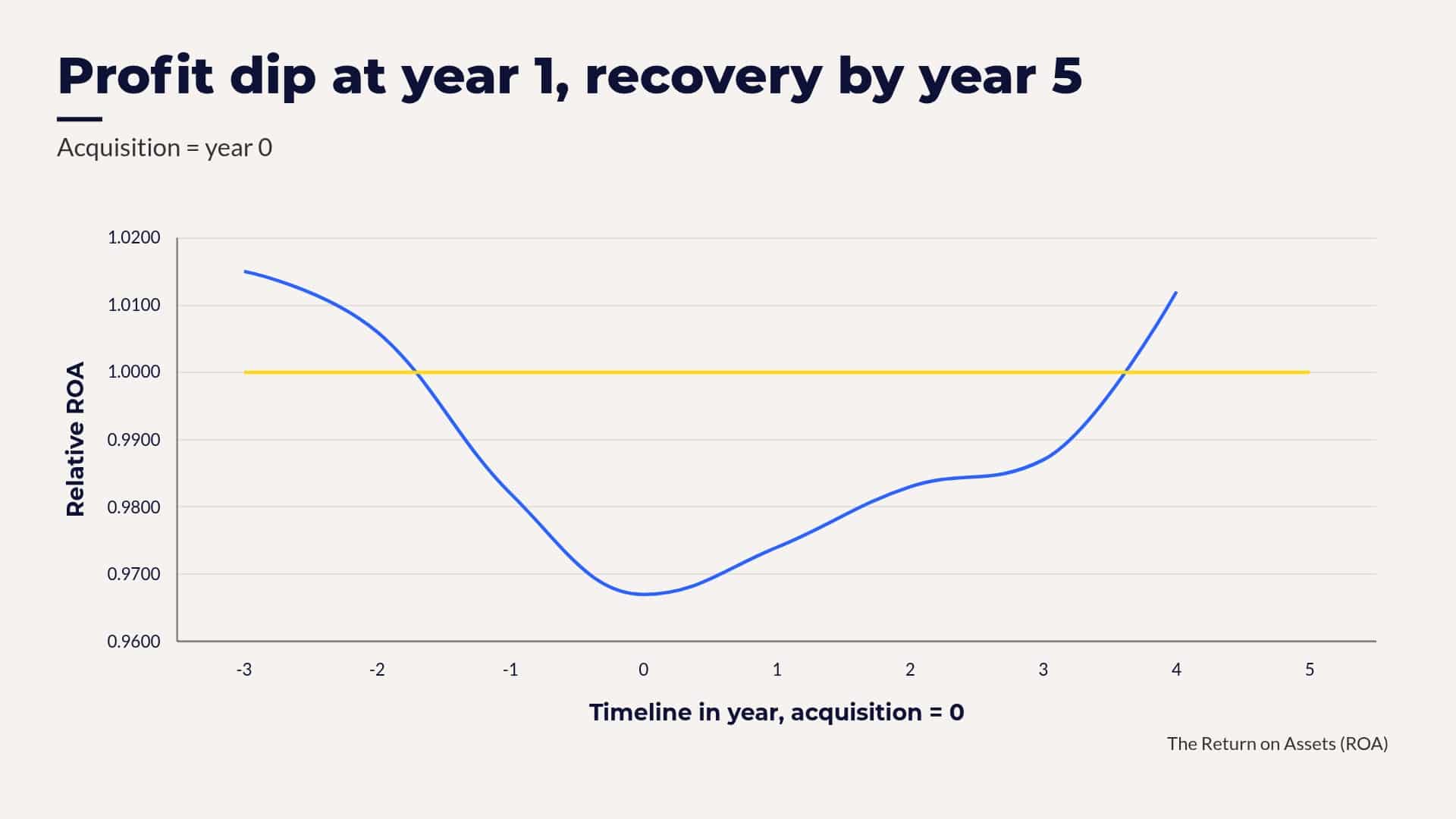
Without human capital data at due diligence, the post-close pattern is predictable. Value erosion surfaces, attrition of key people, integration drag, and slower synergy capture than projected. The response: retention bonuses, integration consultants, culture work-streams, and change management programs.
It is, as a Moroccan proverb says, like pouring water into desert sand. The spending absorbs. The problem does not. And you discover the structural cause eighteen months later, when the retention bonus timeline has expired, and the people it was designed to hold have already decided.
The data makes the mechanism explicit:
Research across broad acquisition samples adds a counterintuitive dimension: post-acquisition workforce reductions are, on average, associated with worse, not better, operating performance. The cost line moves. Throughput, quality, and service delivery degrade. Cutting without the data to distinguish execution capacity from overhead produces the same outcome as the proverb: the spend absorbs, the problem compounds.
The retention bonus does not stop the departure of someone who understood their leverage before the letter of intent was signed. The integration consultant does not recover the institutional knowledge that walked out in month four.
These are not execution failures. They are due diligence failures that surface at integration.
Structured, data-driven human capital diligence does not replace the financial model. It completes it.
It maps the variables the model currently treats as constants: revenue concentration by key person and role, leadership depth against the operating model the acquirer intends to run, capability alignment between current skill distribution and thesis requirements, and organizational resilience, the actual capacity to absorb change without breakdown.
Each of these is measurable before close. Each has a financial translation: revenue at risk, EBITDA drag, integration timeline exposure, synergy capture probability.
It also informs integration design, not just who to protect, but how aggressively to integrate. Research on post-acquisition integration finds that revenue synergy deals achieve the highest performance at intermediate integration levels. Over-integration disrupts the commercial structures and customer-facing relationships the thesis depends. The integration plan itself becomes a value-destruction mechanism when it is calibrated without knowing where the value actually sits and in which roles.
The cost of running a structured HC assessment before close is under one percent of deal value. The exposure it identifies typically runs five to twelve percent. The retention bonuses, integration consulting, and culture programs that substitute for it when risk surfaces post-close frequently exceed it, without recovering the value already lost.
Private equity and corporate development teams price legal risk, environmental risk, technology risk, and regulatory risk with structured frameworks. Human capital risk, the variable that determines whether the people who built the value will stay, perform, and execute under new ownership, is the last major line to run without one.
The data to build that framework has existed for years.
What strategic decision are you making where the human capital assumptions haven’t been tested?