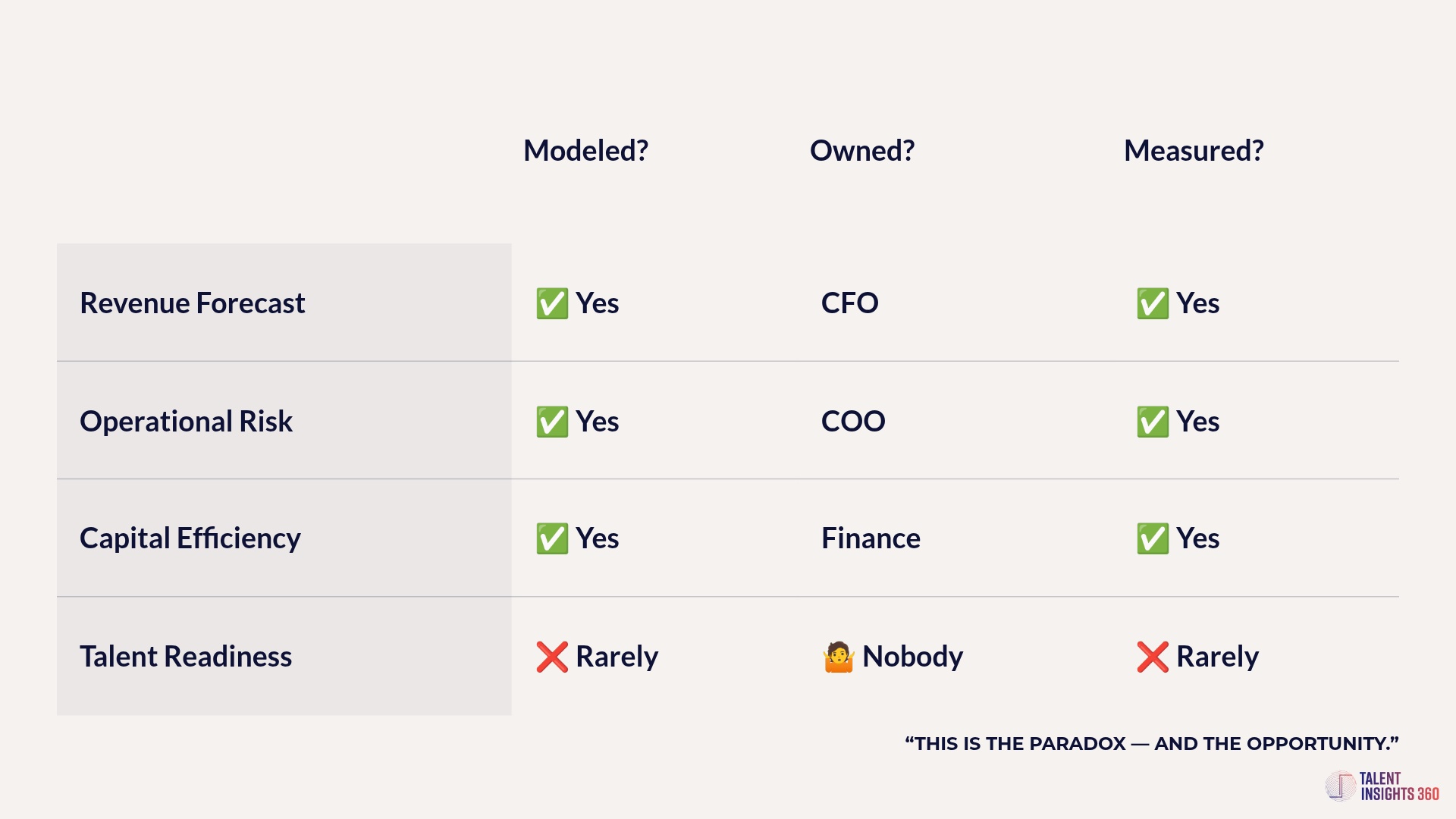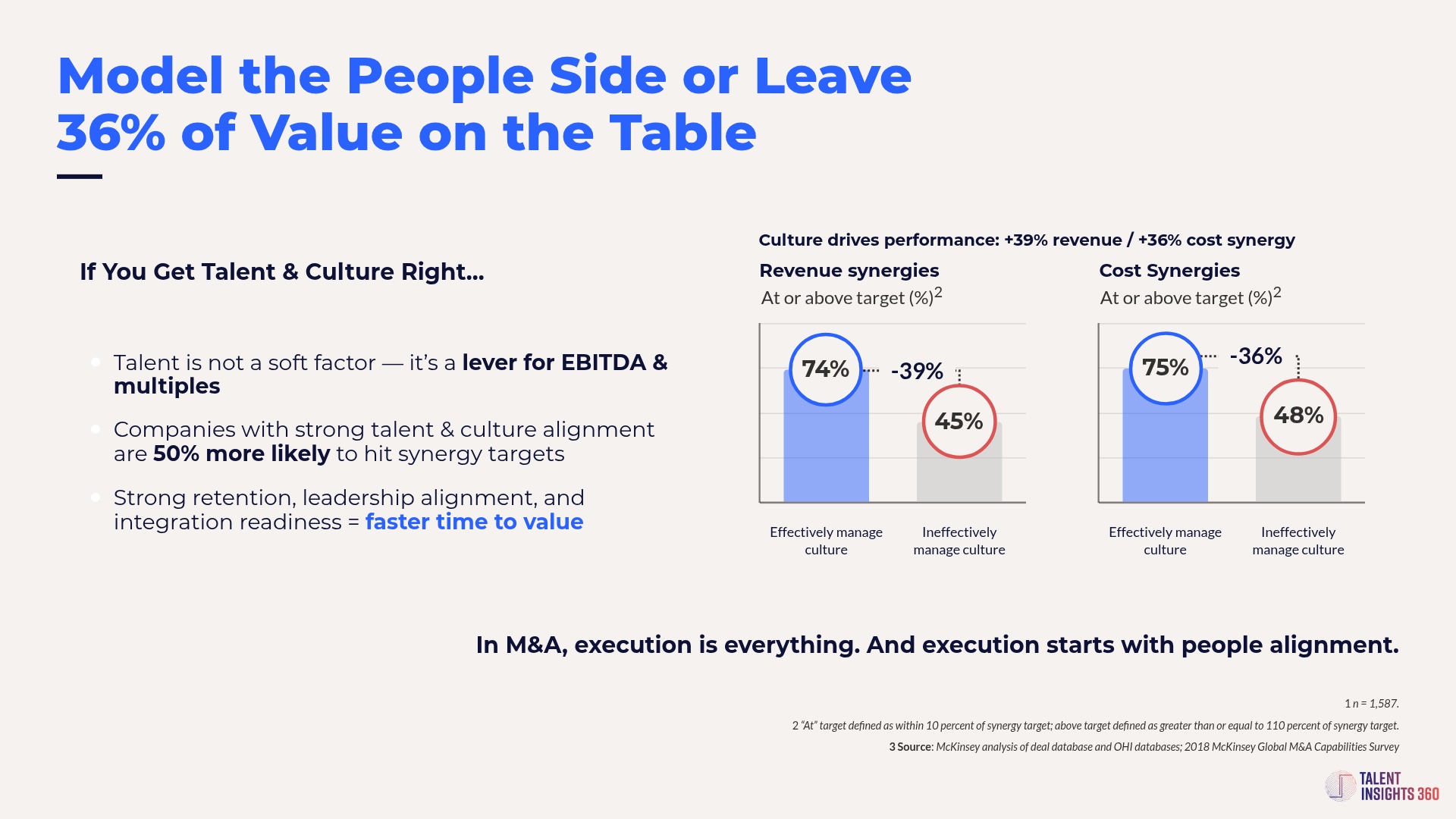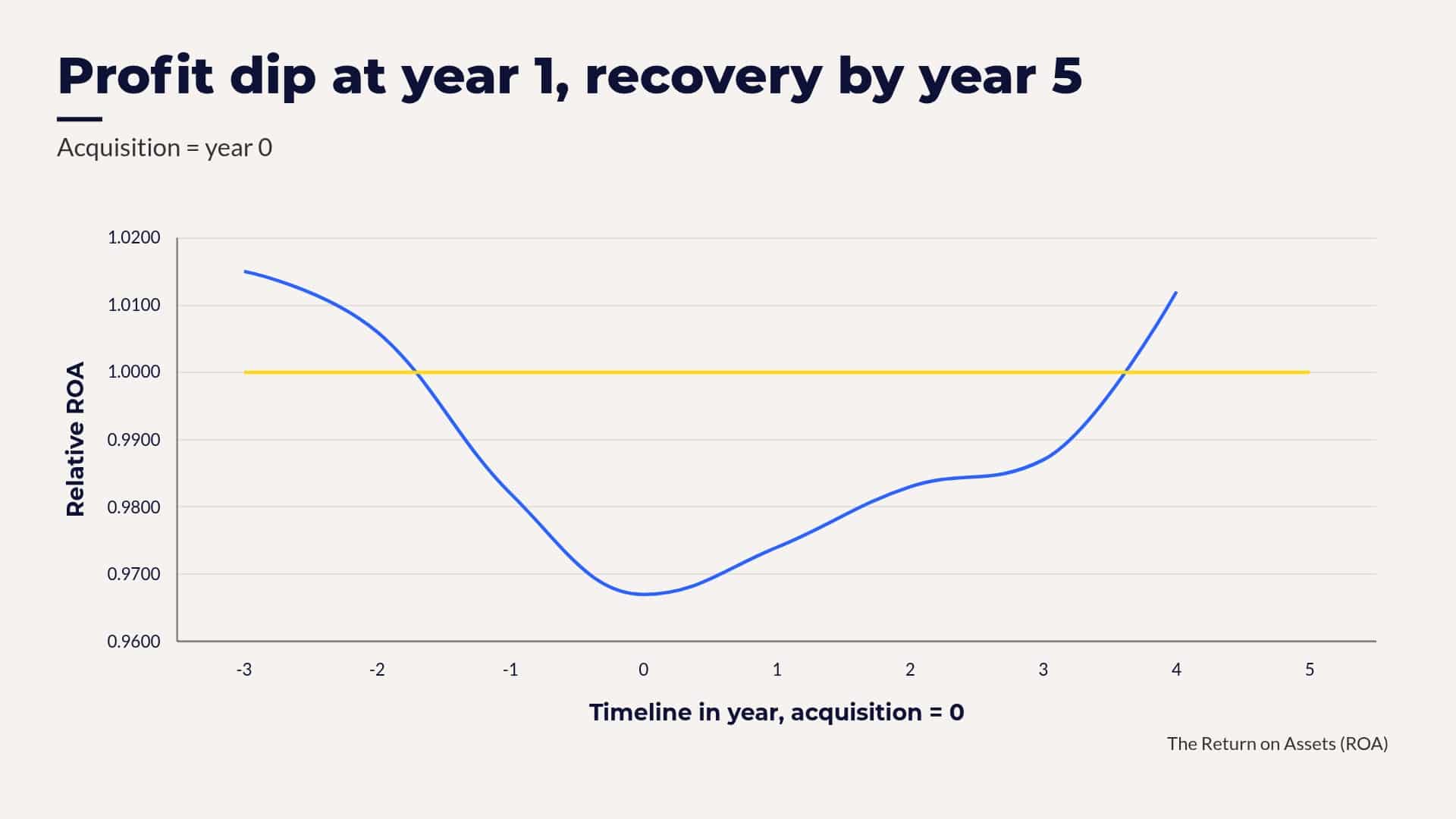
Share Badr Ait Ahmed Revenue synergies are modelled on a basis-point basis. Human capital risk is assessed with an interview guide. That is not

Walk into any boardroom, private equity firm, or leadership retreat, and you will hear the same statement:
“People are our most important asset.”
The consensus is universal.
The paradox is also universal: when it comes to actual strategic planning, investment decisions, or M&A deals, human capital remains largely absent from the process.
How can something that everyone agrees is critical remain so under-managed?
Why do leaders fail to connect talent to value creation, risk, and execution in a measurable way?
This is the human capital paradox. In today’s environment, where execution agility and workforce readiness drive competitive advantage, this gap is costing organizations real value.
When companies build a strategy or investors analyze deals, here’s what typically happens:
At best, you will encounter vague references to “culture integration,” “leadership alignment,” or “employee engagement.”
Rarely will you see a structured talent plan aligned with the execution of strategic goals.
Rarely will workforce risk be quantified alongside financial metrics and operational risk.
This is not just an HR problem. It is a business blind spot.
Unlike capital assets or P&L line items, talent data is fragmented and qualitative by nature.
Skill inventories are incomplete.
Leadership pipeline readiness is often anecdotal.
Cultural risks are rarely linked to hard numbers.
Without trusted, structured talent intelligence, executives hesitate to anchor strategy decisions on talent realities.
Talent is everyone’s problem — and no one’s full accountability.
This fragmentation leaves human capital under-governed relative to its importance.
Talent investments deliver long-term payoff — leadership bench strength, cultural resilience, workforce agility.
But many organizations operate in quarterly cycles. PE firms face 3–5 year hold periods.
As a result, structural talent decisions (e.g. upskilling, workforce architecture, leadership development) are deprioritized.
Many HR functions still present talent topics in qualitative or “soft” terms — engagement, culture, experience — disconnected from value, cost, risk, or execution.
This reinforces the perception that talent is an “HR issue,” not a core business lever.
Boards and investors tune out — even as hidden talent risks accumulate.
When talent realities are disconnected from strategy, organizations face:
In short, not treating talent as a modelled, measurable asset directly impacts business value.
The most forward-thinking firms and investors are closing this gap.
They apply the same rigour to talent as they do to capital:
They do this not as an HR initiative — but as a business-critical lever to drive growth, manage risk, and protect value.
Closing the human capital paradox is not a question of rhetoric — everyone already agrees on the importance of talent.
It is a question of discipline:
At Talent Insights 360, this is exactly where we focus:
We help investors and organizations make smarter talent decisions — faster, and with less risk.
We bring structured, insight-driven analysis that bridges human capital with value creation.
Because in today’s environment, companies that do not manage talent as strategically as they manage capital will lose the race, no matter what their board decks say.
If this resonates with your leadership challenges or investment priorities, I’d welcome a conversation.
Let’s turn talent from a blind spot into a competitive advantage.

Share Badr Ait Ahmed Revenue synergies are modelled on a basis-point basis. Human capital risk is assessed with an interview guide. That is not

Share Badr Ait Ahmed 60 to 70 percent of your operating cost is people. You optimize procurement with vendor scorecards. Marketing with attribution models.

Share Badr Ait Ahmed The U.S. military figured out strategic workforce planning in the 1970s. Most Fortune 500 companies still haven’t. Hidden in defence

Share Badr Ait Ahmed “Culture fit” might be the most dangerous phrase in M&A. Nearly every executive claims cultural alignment matters—yet the data tells

Share Badr Ait Ahmed Why Automating the Back Office Won’t Transform the Business—and Why Most AI Projects Fail Trying The Efficiency Obsession In boardrooms

Share Badr Ait Ahmed Since 2000, companies have spent more than $57 trillion on mergers and acquisitions. That figure represents the largest sustained transfer of