
Share Badr Ait Ahmed Revenue synergies are modelled on a basis-point basis. Human capital risk is assessed with an interview guide. That is not


Corporate responses to DEI initiatives in North America vary widely. Some companies step back while others reinforce their commitments.
In Europe, DEI discussions continue, with regulatory changes affecting corporate strategies and companies adapting or reaffirming their inclusion policies.
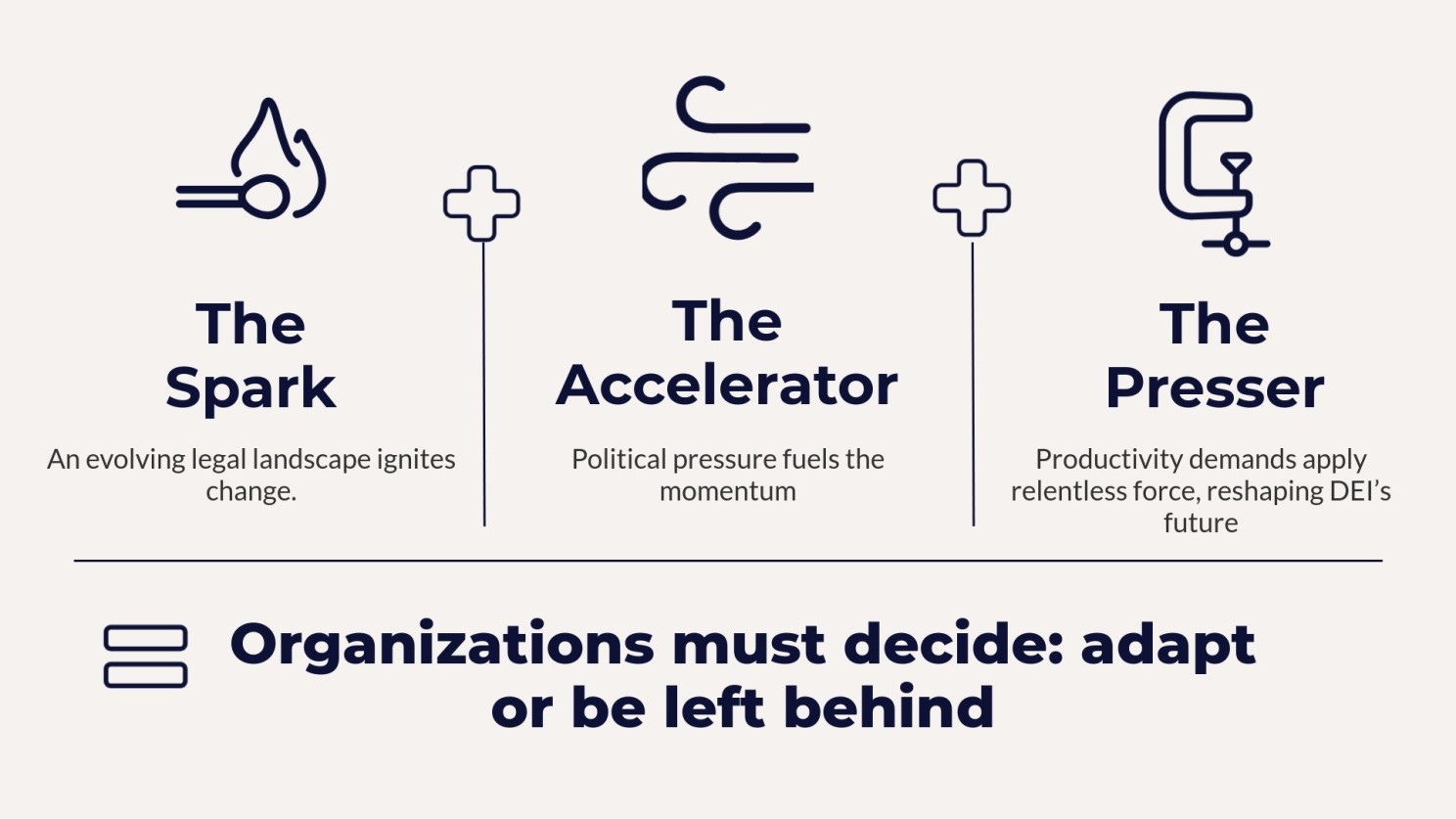
Companies are now expected to be more agile and future-ready, shifting focus toward technological advancements and workforce adaptability. And aim to foster a culture of meritocracy, skills, leadership, and internal mobility.
Diversity, Equity, and Inclusion (DEI) is not failing; rather, it is at a critical juncture. A crisis, by definition, is a pivotal moment that presents options requiring necessary changes, which may lead to outcomes that are either better or worse before establishing a new equilibrium.
Hence, the current situation presents us with a choice: we can either allow setbacks to deepen or choose to adapt and evolve to align with our business needs.
And the resistance to DEI does not equate to failure but rather a shift in corporate strategies. Organizations are under pressure to enhance productivity, drive innovation, and navigate large-scale digital transformations. As priorities shift, DEI must adapt to align with these emerging business imperatives while demonstrating measurable value.

Share Badr Ait Ahmed Revenue synergies are modelled on a basis-point basis. Human capital risk is assessed with an interview guide. That is not
Share Badr Ait Ahmed 60 to 70 percent of your operating cost is people. You optimize procurement with vendor scorecards. Marketing with attribution models.

Share Badr Ait Ahmed The U.S. military figured out strategic workforce planning in the 1970s. Most Fortune 500 companies still haven’t. Hidden in defence

Share Badr Ait Ahmed “Culture fit” might be the most dangerous phrase in M&A. Nearly every executive claims cultural alignment matters—yet the data tells

Share Badr Ait Ahmed Why Automating the Back Office Won’t Transform the Business—and Why Most AI Projects Fail Trying The Efficiency Obsession In boardrooms

Share Badr Ait Ahmed Since 2000, companies have spent more than $57 trillion on mergers and acquisitions. That figure represents the largest sustained transfer of